
September 2, 2024
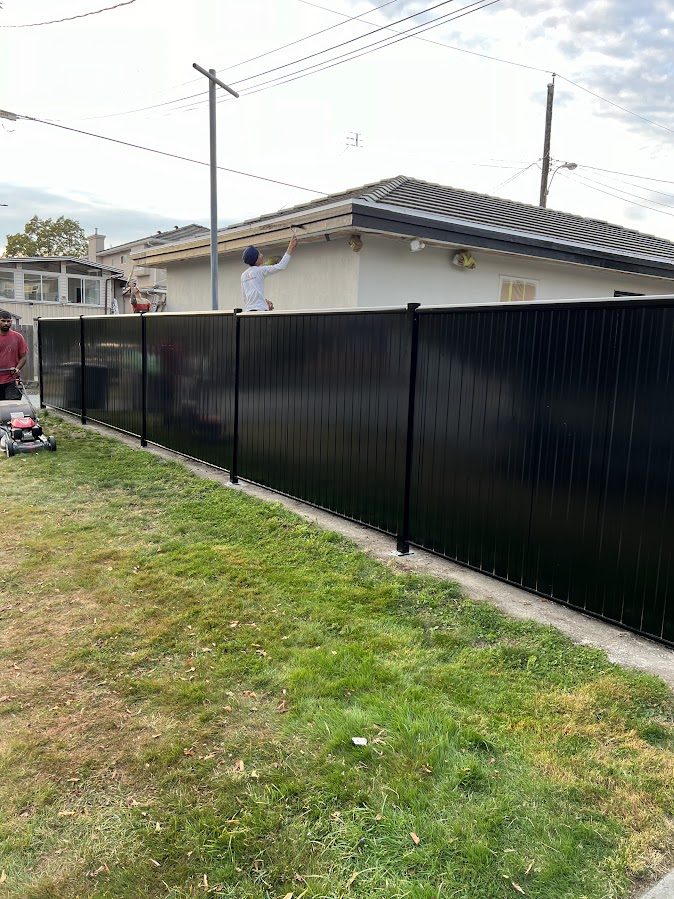
Cedar privacy fencing, aluminum, and custom gates — matching the fence to the yard, the bylaw and how much upkeep you want.
A fence does three jobs at once: it marks the property line, it gives privacy, and it sets the first impression of the house. Getting all three right is mostly a matter of picking the material and height for the specific yard rather than fencing everything the same way.
Cedar privacy fencing is the regional standby. Board-on-board and solid-panel cedar gives the most screening per dollar, weathers gracefully, and takes stain if you want to hold a particular colour. It suits rear yards and side yards where privacy is the whole point.
Metal and aluminum fencing goes where you want a boundary without a wall — pool surrounds, front yards, and sightlines you do not want to lose. Powder-coated aluminum needs no refinishing and can be matched to deck railings so the yard reads as one design.
Front yards are usually the constrained case. Most Lower Mainland municipalities allow less height at the front than the rear, so a tall solid fence that is fine behind the house may not be permitted in front of it. We confirm the bylaw for your address before building rather than after.
Sloped yards need a decision early: step the fence in level sections, or rack the panels to follow the grade. Stepping suits solid cedar and looks deliberate; racking follows the ground more closely and avoids triangular gaps at the bottom.
Plan gates before the posts go in. Gate locations affect post spacing along the entire run, and a gate wide enough for a mower, a trailer or a wheelbarrow is far easier to allow for at layout than to cut in afterwards.
See our fencing page for what we install, or the fence and gate gallery for finished work around the Lower Mainland.