July 8, 2024
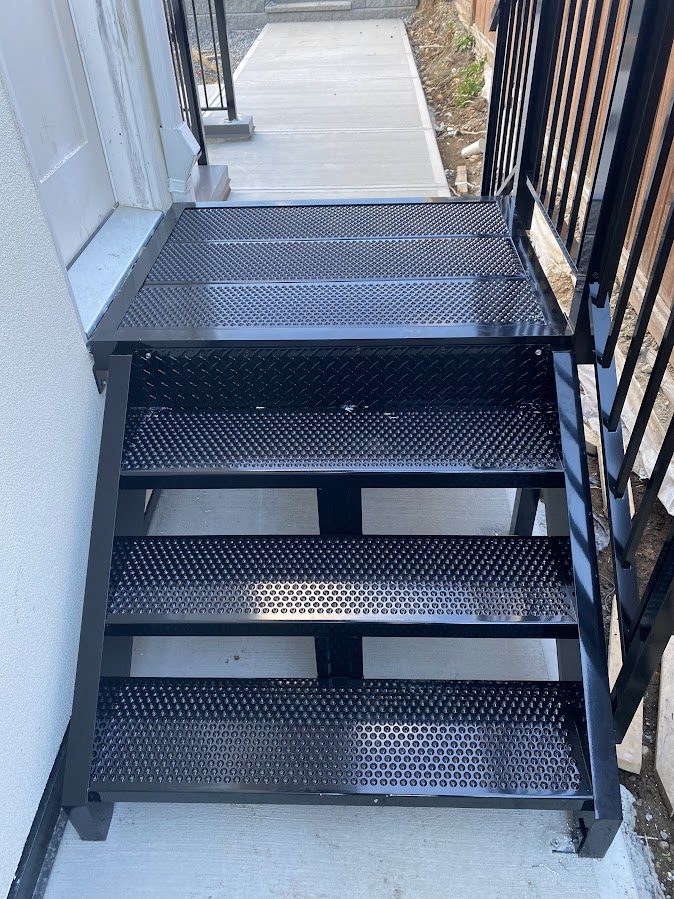
Stairs take the worst of the weather on any deck. Powder-coated aluminum removes rot, rust and the annual refinishing job.
Stairs are the first part of a deck to show its age. They catch rain from every direction, hold moisture where the tread meets the stringer, and take more concentrated foot traffic than any other surface on the structure.
Wood stringers in this climate need to be detailed carefully and maintained honestly — sealed end grain, good drainage, and refinishing on schedule. Neglect any of those and the soft spots start at the bottom step, where splashback keeps the timber damp.
Powder-coated aluminum sidesteps the problem. It does not rot, warp or rust, the finish is baked on rather than brushed on, and maintenance is a wash rather than a sanding-and-staining weekend. Treads can be built with a slip-resistant surface, which matters on stairs that stay wet for months.
The other advantage is visual continuity. When the deck already has aluminum or glass railings, matching aluminum stair guards and handrails make the deck and the stairs read as one system instead of two projects that happened to meet.
Aluminum is not automatically the right call everywhere. On a heritage house with cedar decking and wood spindles, wood stairs finished to match the trim usually look better, and we build plenty of them.
We size stair rise, run and handrails to the applicable BC Building Code for your deck height, and we build the guard as part of the same system as the deck railing. See the aluminum staircase gallery for recent examples.