
June 11, 2024
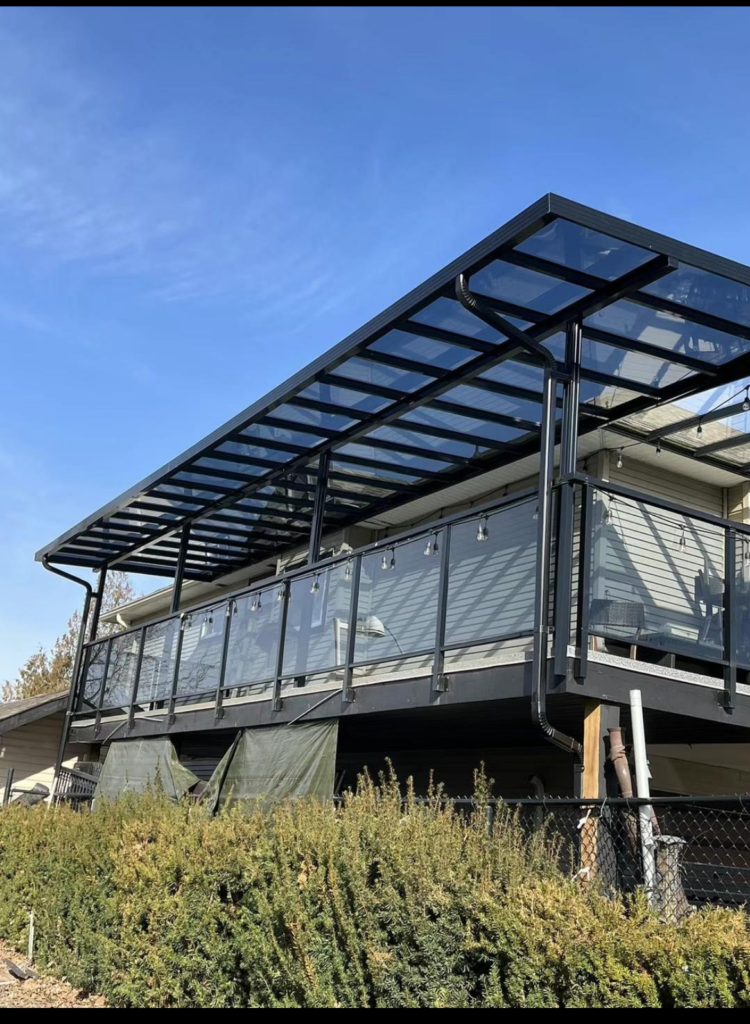
A cover turns a deck you use four months a year into one you use twelve. What to consider on style, drainage and light before building one.
The single biggest return on a Vancouver deck is not extra square footage — it is a roof. A covered deck is usable in November drizzle, keeps furniture out of the weather, and shelters the doors and siding behind it.
Solid roofs give the most protection. Framed and shingled or metal-roofed structures tie into the house roofline and keep the space genuinely dry underneath. They also block the most light, so on north-facing decks and rooms behind them we usually look at skylight panels or a partial cover.
Polycarbonate and glass-panel covers keep the rain off while letting daylight through, which matters when the deck sits in front of a kitchen or living room window. They need occasional cleaning to stay clear, particularly under trees.
Pergolas and slatted covers are a different tool: they break up sun and define the space, but they are not weather protection. If the goal is shade for a hot west-facing deck rather than rain cover, a pergola is often the better-looking and cheaper answer.
Whatever the style, drainage decides whether the cover is a success. Water has to leave the roof, get into a gutter, and go somewhere away from the house and the deck posts. Covers that simply dump water at the edge of the deck create a permanently wet strip and, over time, rot.
Lighting and heat are worth planning at the same time. Running wiring for pot lights, a fan or an overhead heater is straightforward while the structure is open and awkward afterwards.
We build patio covers as standalone projects and as part of new decks. Get in touch with your deck dimensions and which rooms sit behind it, and we will work out what makes sense.