
March 28, 2024
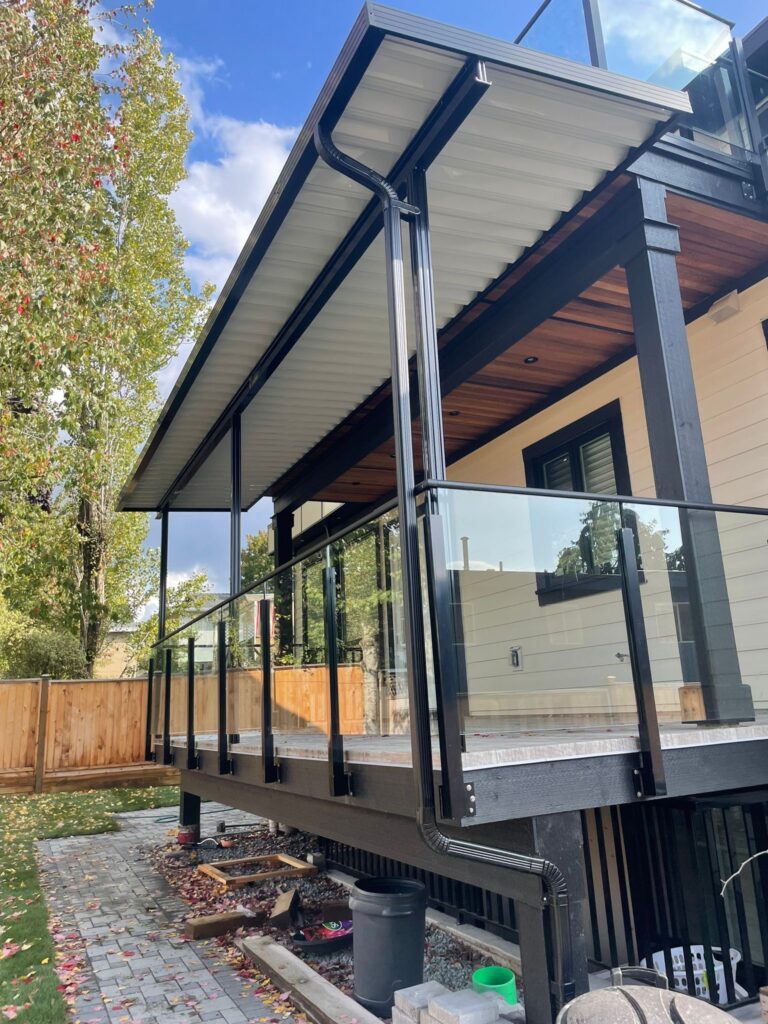
Frameless glass keeps a view open; aluminum and wood spindles cost less and suit traditional homes. Here is how we help clients pick between them.
Railings are the most visible part of a deck and usually the part people agonise over longest. The choice is rarely about safety — every guard we build is sized for the deck height and the applicable BC Building Code — and almost always about sightlines, upkeep and how the railing reads against the house.
Glass railings make sense when there is something to look at. On elevated decks and balconies with a water, city or mountain outlook, a frameless or semi-frameless tempered glass panel keeps the view from the sofa as good as the view standing at the rail. Glass also lets light through to whatever is underneath, which matters on narrow side yards and covered patios.
The honest downside of glass is cleaning. Rain spots show, and a deck under trees will need wiping down more often than one in the open. Panels are heavier than spindles, so the deck framing and posts have to be planned for them from the start rather than retrofitted casually.
Spindle railings — aluminum or wood pickets — are the practical default for most Vancouver decks. They cost noticeably less per linear foot, they suit craftsman and heritage homes where a frameless glass panel would look out of place, and a damaged picket is a small repair rather than a panel replacement.
Powder-coated aluminum splits the difference on maintenance: it will not rot, warp or rust through a wet winter, and it washes clean rather than needing sanding and re-staining. We build matching aluminum stair guards and handrails so the deck and the stairs read as one system.
You can also mix them. A common approach is glass across the view side of the deck and spindles along the sides and stairs, which keeps the outlook open where it counts and holds the budget down.
See our deck railings page for the full range, or browse the project galleries to see how each option looks installed.